News
Yuma's best legends, and what the records say about them
The snake pit. The insane cell. The prison nobody escaped. A woman in white in a downtown theater balcony. Some of Yuma's favorite stories hold up. A lot of them don't. Here's which is which.
Founder & Publisher
- Published
Full article
Every town has its stories. Yuma just has a prison to hang them on.
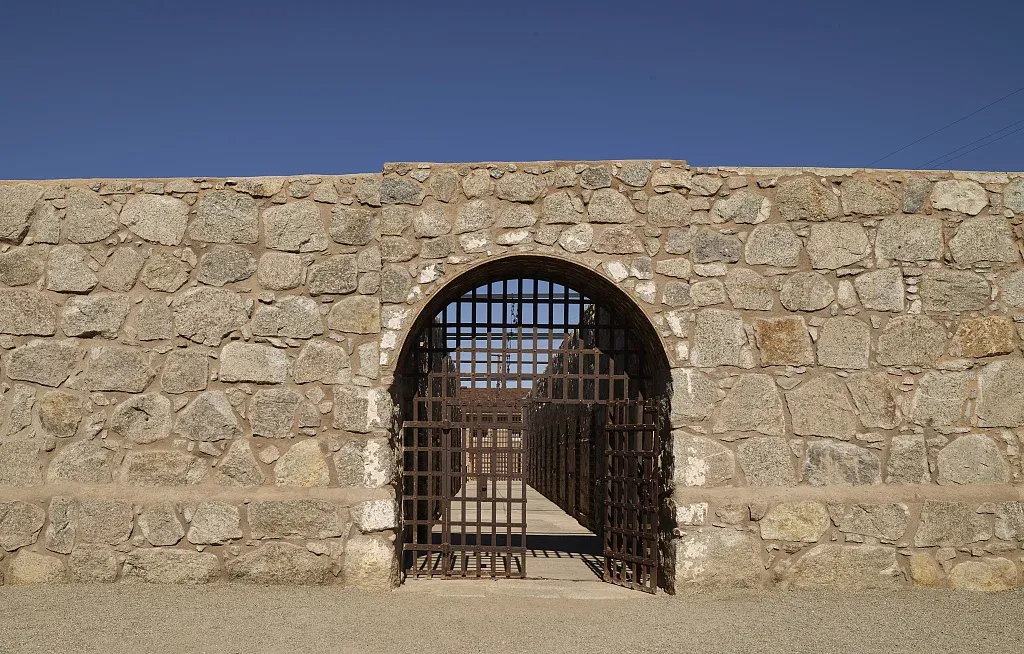
The Yuma Territorial Prison ran for 33 years, from 1876 to 1909. In that time it got a reputation that Hollywood, pulp writers and generations of tour guides have kept polishing ever since. In 1993, Arizona Highways writer Leo Banks went back to the records to see which stories held up.
A lot of them didn't.
The prison legends
"Nobody ever escaped." Wrong. The records show 42 escapes and 96 attempts. Most of the men who got away did it from work crews outside the walls or while being moved, not from inside.
The Snake Pit. The story goes that guards dropped snakes down the ventilation shaft of the Dark Cell. Banks found no researcher who could confirm it, and said the tale seemed to start as a scorpion and grow into rattlesnakes with each retelling. The only recorded snakebite death of an inmate happened outside the prison, on the prison farm, in 1899.
The Dark Cell. This one is real, just smaller than its legend. It was a chamber cut into the hill, used for punishment. Most stays were short: three to seven days for minor offenses, up to 60 for violent escapees. It usually didn't hold one man alone.
The Insane Cell. Historians believe it never existed. According to Banks, the "cell" people point to was a hole dug into the hill by a movie company.
The whipping post. A 1958 movie showed one. The prison never had one.
The gallows. No scaffold at the prison either. The one hanging connected to it happened at the county courthouse.
None of that makes it a pleasant place. Cells were carved into the hillside, some held six men in space built for four, and summers topped 120 degrees. More than 100 prisoners died there, most of them from tuberculosis, True West magazine reported.
But Banks also found a prison that was, in some ways, ahead of its time. It had one of the first libraries in the territory and an informal school starting in 1883. It got electricity in 1885, before the town of Yuma did. Guards weren't allowed to discipline prisoners themselves. They had to report problems to the superintendent.
So the prison was harsh and it was progressive. Both are true, and neither one is the movie version.
The downtown stories
The ghost stories don't stop at Prison Hill. Lynnette Humphrey, who runs the Yuma Uncovered history tours, walked AZFamily through two downtown favorites last month.
The Yuma Main Street Theatre. It opened in 1913 as the Zellers Theatre. It burned a year later, started by teenagers playing with matches under the stage, according to Humphrey. It was rebuilt in 1926 and burned again not long after. The stories people tell today: faucets and toilets turning on by themselves, shouting from an empty balcony, a woman in a white dress near the balcony, and faint trumpet notes some link to a musician who died in the building. Nobody has named the musician.
Lute's Casino and the old Central Hotel. The building dates to 1901. A general store was downstairs, and the Central Hotel ran upstairs until the mid-1970s. Folklore attaches a lot to that upper floor, including a story about a woman killed in front of her children. Owner Mike Lutes told AZFamily he hears sounds he can't explain when he's closing up at night.
Those are stories, told as stories. There's no record behind the woman in white, and nobody's pretending otherwise. That's sort of the point of folklore.
Where this comes from
- Arizona Highways, "Yuma Territorial Prison," Leo W. Banks, March 1993. Reporting based on prison records; escapes, the Dark Cell, the legends. https://www.arizonahighways.com/archive/issues/chapter/Doc.871.Chapter.4
- True West, "The Paranormal Prison." Reporting; deaths at the prison. https://truewestmagazine.com/the-paranormal-prison/
- AZFamily, "Haunted history: Exploring the spirits said to linger in downtown Yuma," Oct. 30, 2026. Reporting; Lynnette Humphrey and Mike Lutes. https://www.azfamily.com/2026/10/30/haunted-history-exploring-spirits-said-linger-downtown-yuma/
- Yuma Territorial Prison history timeline. The prison's own history site. https://yumaprison.org/?p=16
Related
Sources 4
- Secondary source / research lead · News reportArizona Highways, "Yuma Territorial Prison," Leo W. Banks, March 1993
Reporting based on prison records; escapes, the Dark Cell, the legends.
- Secondary source / research lead · News reportAZFamily, "Haunted history: Exploring the spirits said to linger in downtown Yuma," Oct. 30, 2026
Reporting; Lynnette Humphrey and Mike Lutes.
- Secondary source / research lead · News reportTrue West, "The Paranormal Prison."
Reporting; deaths at the prison.
- Primary source · Public statementYuma Territorial Prison history timeline
The prison's own history site.