News
Thirty-two products promise to fix salty soil. A Yuma field trial is finding out which ones earn their price.
Every acre-foot of Colorado River water that irrigates Yuma lettuce also brings salt. Growers get pitched plenty of products to deal with it. A University of Arizona extension trial in Yuma is testing 32 of them side by side, on purpose, with saltier water.
Founder & Publisher
- Published
Full article
Here's something most people who eat Yuma lettuce never think about. The water that grows it is a little salty.
Not salty like the ocean. But the Colorado River picks up dissolved salts on its long trip south, and every time a field gets irrigated, some of that salt stays behind in the soil after the water is gone. Leave enough of it and lettuce struggles to pull in water, even when the ground is wet. Growers manage it by running extra water through the soil to flush salt down below the roots, which costs water and money.
So there's a market for anything that promises to make salt less of a problem. And according to the University of Arizona, there are a lot of products in that market.
The trial
Robert Masson, an agricultural agent with University of Arizona Cooperative Extension in Yuma County, is testing 32 commercial products designed to reduce the effects of soil salinity, KYMA reported Tuesday.
The setup is at the extension's Yuma County field site, on lettuce irrigated with underground drip lines. The researchers plan to deliberately raise the salt concentration in the irrigation water, then watch what happens to the soil and the lettuce under each treatment. The point is to find out which products actually help and whether they're worth what they cost.
KYMA didn't name the products, and no results have been published yet.
This isn't the first round
Masson's extension office has been running these head-to-head product trials for a while, and it posts the reports publicly. One from the fall 2025 romaine season tested a salt-mitigation product called BalaSal at three different rates against untreated lettuce. Plant weight and heart size came out about the same, but the treated plots produced more marketable heads, and soil samples at the end showed differences in sodium. The report also admits what didn't work: the salinity meters tracked soil moisture too closely to be trusted, and an unusually warm stretch pushed harvest up by about a week. You can read it here.
That's the kind of plain, warts-and-all result growers can actually use.
Why it matters beyond the farm
Salt is one of the quieter pressures on Yuma agriculture, and it gets louder when water gets tighter. Flushing salt out of the root zone takes water, and water supplies in the Colorado River Basin remain under pressure. If some of these products let growers keep yields up with less leaching water, that's worth knowing. If most of them don't, that's worth knowing too, before somebody spends money on them.
It also fits a pattern. Between the new soil health lab, the whitefly forecasting work and this, a lot of the research that matters for Yuma's fields is happening in Yuma.
Related reading
- Most soil science was built for wetter places. A Yuma lab is studying desert ground
- Yuma's new U of A bug scientist has a question: can a mild winter predict a bad whitefly spring?
- Yuma Researchers Test Resistant Lettuce and New Tools Against Fusarium Wilt
Photo credit
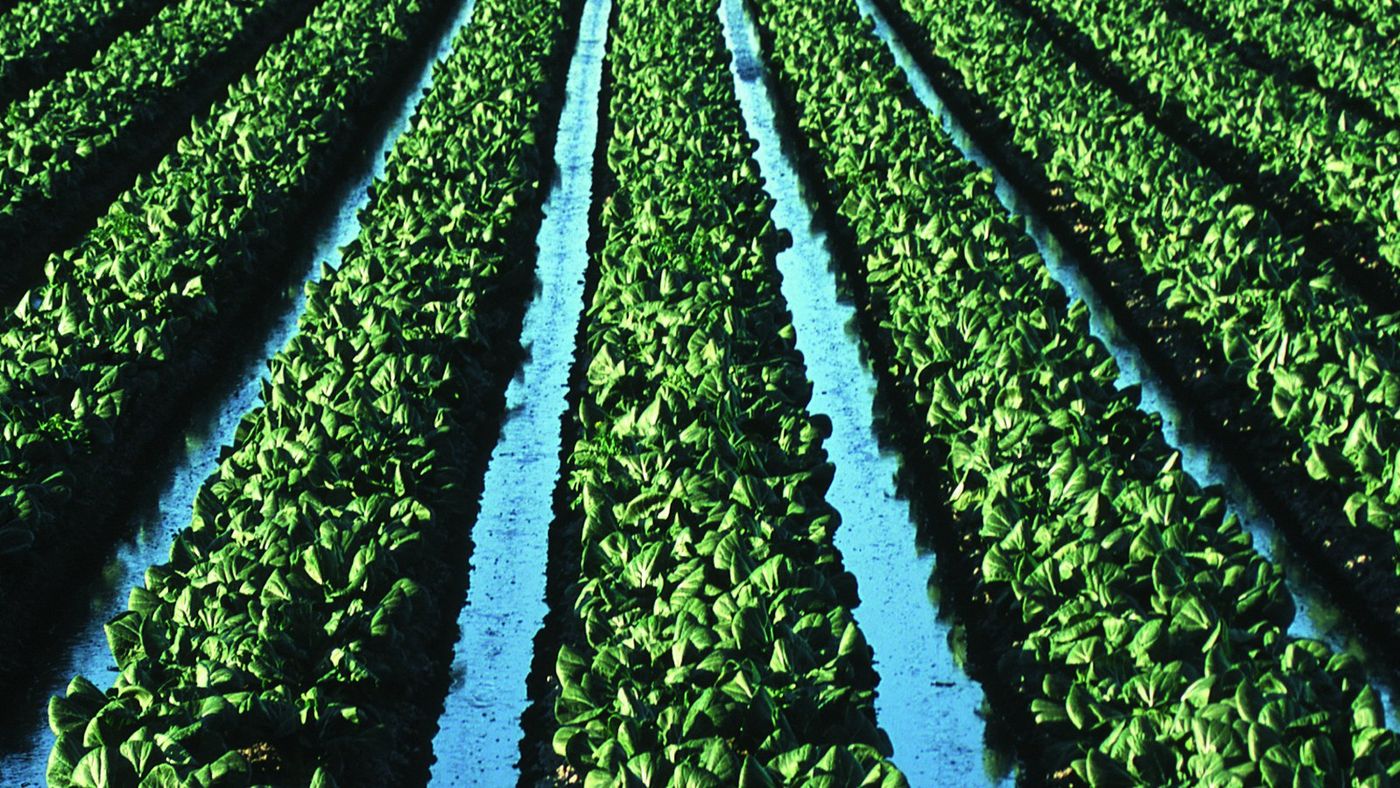
Furrow-irrigated lettuce in Yuma. Photo by Jeff Vanuga, USDA Natural Resources Conservation Service (public domain), via Wikimedia Commons. Original image(NRCS_Photo_Gallery).jpg).
Sources
- KYMA, University of Arizona researchers in Yuma test products to fight soil salt, Oct. 27, 2026.
- University of Arizona Cooperative Extension, Romaine L&M Services BalaSal Rate Study, Fall 2025, Robert Masson, PI.
- University of Arizona, Robert Masson profile.
Sources 3
- Primary source · Public statementRobert Masson profile
University of Arizona, Robert Masson profile.
- Primary source · Public statementRomaine L&M Services BalaSal Rate Study, Fall 2025
University of Arizona Cooperative Extension, Romaine L&M Services BalaSal Rate Study, Fall 2025, Robert Masson, PI.
- Secondary source / research lead · News reportUniversity of Arizona researchers in Yuma test products to fight soil salt
KYMA, University of Arizona researchers in Yuma test products to fight soil salt, Oct. 27, 2026.