News
Dolores Huerta has died. In the place Cesar Chavez was born, this year made her harder to sum up, and more important.
Dolores Huerta died Oct. 28 at 96. San Luis Mayor Nieves Riedel met her at 17 in a Delano grape field. Seven months ago, Huerta said Cesar Chavez, who was born in Yuma and died in San Luis, had assaulted her. Both things belong in how Yuma County remembers her.
Founder & Publisher
- Published
Full article
Nieves Riedel was 17 the first time she met Dolores Huerta. Riedel was picking grapes in Delano, California. Huerta was there organizing the people doing the picking.
Riedel is the mayor of San Luis now. When KYMA asked her about Huerta's death this week, she put it simply: "She was a person that we young girls admire and follow."
Huerta died Wednesday, Oct. 28, in California. She was 96. Her family announced it through the Dolores Huerta Foundation and said she died of cancer, according to the Texas Tribune.
Why it lands differently here
Most of the country knows Huerta as the co-founder of the United Farm Workers and the person who gave the movement its rallying cry, "Sí, se puede." She started organizing in California at 25, went on to fight pesticides and poverty wages in the fields, and spent the decades after that working on voting rights and women's rights. She was still leading rallies last year.
Yuma County knows her through the fields, and through a man who was born here.
Cesar Chavez was born in Yuma in 1927 and spent his early childhood on his family's farm in the North Gila Valley. He died in San Luis, Arizona, in 1993. For decades this corner of the state treated that as a point of pride. San Luis has a Cesar Chavez Cultural Center. The city used to hold events all through March.
County Supervisor Tony Reyes told KYMA that people like Huerta and Chavez are the reason San Luis looks the way it does today, and that the town didn't just develop that way on its own. Riedel credited Huerta's work with changes like health care and child care for farmworker families.
The part of this year nobody can skip
In March, The New York Times published an investigation alleging that Chavez sexually abused girls and women for years. On the same day, March 18, Huerta published her own statement. She wrote that Chavez had sexually assaulted her twice, that both assaults led to pregnancies, and that she stayed quiet for decades because she feared the truth would damage the farmworker movement, according to NPR. Chavez died 33 years ago and cannot respond. The Times said it had confirmed paternity through DNA. MySA also reported that confirmation.
What followed moved fast, including here. Arizona lawmakers voted to repeal the state's Cesar Chavez Day, and Gov. Katie Hobbs signed House Bill 2072 on April 1, KOLD reported. When she signed it, Hobbs thanked farmworkers by name, including those in "the lettuce fields of Yuma." San Luis renamed its observance Farmworkers Day. Tucson now marks Dolores Huerta Day on March 30.
March 31, Chavez's birthday, was quiet in San Luis this year. KYMA found the public events canceled and residents still sorting out how they felt. One woman said maybe it had been a mistake to idolize one person so much. A man asked why nobody said anything while Chavez was alive.
Huerta answered that second question herself, in March. She was afraid of what it would cost the people she'd spent her life fighting for.
What she leaves
It would be easy to turn Huerta's death into one more Chavez story. That would be getting it backward. The people who spoke this week in Yuma County didn't talk about him much. They talked about her, and about what changed for families in the fields.
She held two things at once for most of her life: the movement she helped build, and the assaults she said one of its founders committed against her. She carried that privately for decades and then, at 95, said it out loud. How people in a place like San Luis weigh all of that is up to them. But they get to weigh it with her version of events in hand, which they didn't have a year ago.
Riedel met her at 17. Plenty of the people who work Yuma County's winter lettuce harvest this season weren't born when Huerta started organizing. Her work changed the movement those workers inherited.
Related reading
Photo credit
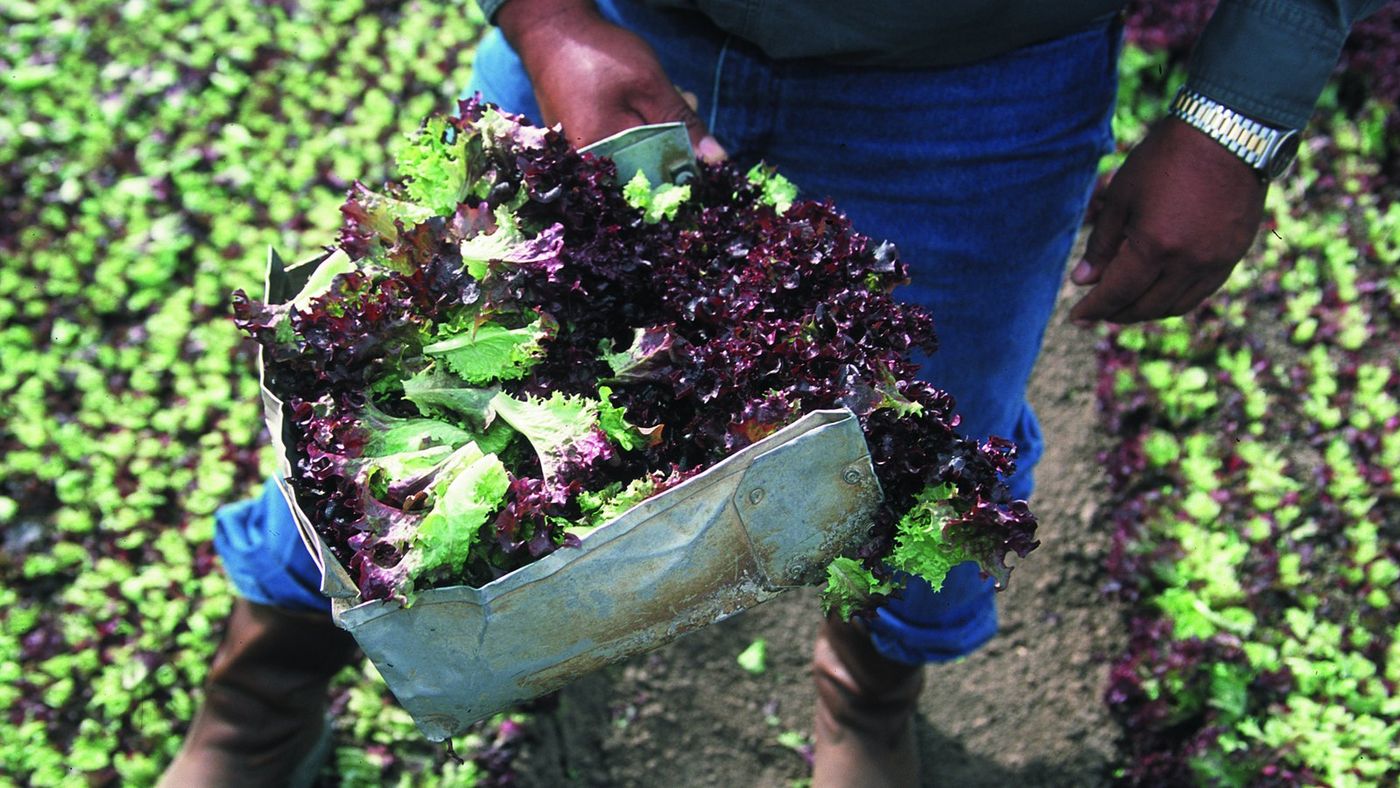
Leaf lettuce harvested by hand in a Yuma field. Photo by Jeff Vanuga, USDA Natural Resources Conservation Service (public domain), via Wikimedia Commons. Original image(NRCS_Photo_Gallery).jpg).
Sources
- KYMA, Locals react to Dolores Huerta's passing, Oct. 28, 2026. Riedel and Reyes quotes and paraphrase.
- Texas Tribune, Dolores Huerta dies at 96, Oct. 28, 2026. Date, cause, family announcement, career details.
- ABC News, Labor rights leader Dolores Huerta dies at 96, Oct. 28, 2026.
- NPR, New York Times reports sexual abuse allegations against Cesar Chavez, March 18, 2026.
- KOLD, Gov. Hobbs signs bill repealing observance of César Chávez Day in Arizona, April 1, 2026. HB 2072, House vote 48-8, San Luis Farmworkers Day, Tucson Dolores Huerta Day.
- KYMA, Cesar Chavez Day falls quiet in San Luis, March 31, 2026.
- United Farm Workers, The Story of Cesar Chavez. Birth near Yuma (1927) and death in San Luis (1993).
- Dolores Huerta Foundation, In Memory of Dolores Huerta, Oct. 28, 2026.
Sources 9
- Secondary source / research lead · News reportCesar Chavez Day falls quiet in San Luis
KYMA, Cesar Chavez Day falls quiet in San Luis, March 31, 2026.
- Secondary source / research lead · News reportDolores Huerta dies at 96
Texas Tribune, Dolores Huerta dies at 96, Oct. 28, 2026. Date, cause, family announcement, career details.
- Secondary source / research lead · News reportGov. Hobbs signs bill repealing observance of César Chávez Day in Arizona
KOLD, Gov. Hobbs signs bill repealing observance of César Chávez Day in Arizona, April 1, 2026. HB 2072, House vote 48-8, San Luis Farmworkers Day, Tucson Dolores Huerta Day.
- Primary source · Public statementIn Memory of Dolores Huerta
Dolores Huerta Foundation obituary and family statement, Oct. 28, 2026. Confirms date, age and March disclosure.
- Secondary source / research lead · News reportLabor rights leader Dolores Huerta dies at 96
ABC News, Labor rights leader Dolores Huerta dies at 96, Oct. 28, 2026.
- Secondary source / research lead · News reportLocals react to Dolores Huerta's passing
KYMA, Locals react to Dolores Huerta's passing, Oct. 28, 2026. Riedel and Reyes quotes and paraphrase.
View 3 more sources
- Secondary source / research lead · News reportMySA: NYT investigation details allegations against Cesar Chavez
Dina Arevalo, March 18, 2026. Reports the Times DNA confirmation of paternity; supplements NPR attribution.
- Secondary source / research lead · News reportNew York Times reports sexual abuse allegations against Cesar Chavez
NPR, New York Times reports sexual abuse allegations against Cesar Chavez, March 18, 2026.
- Primary source · Public statementThe Story of Cesar Chavez
United Farm Workers, The Story of Cesar Chavez. Birth near Yuma (1927) and death in San Luis (1993).