News
Arizona’s temporary diesel order has strict limits for farm-related travel
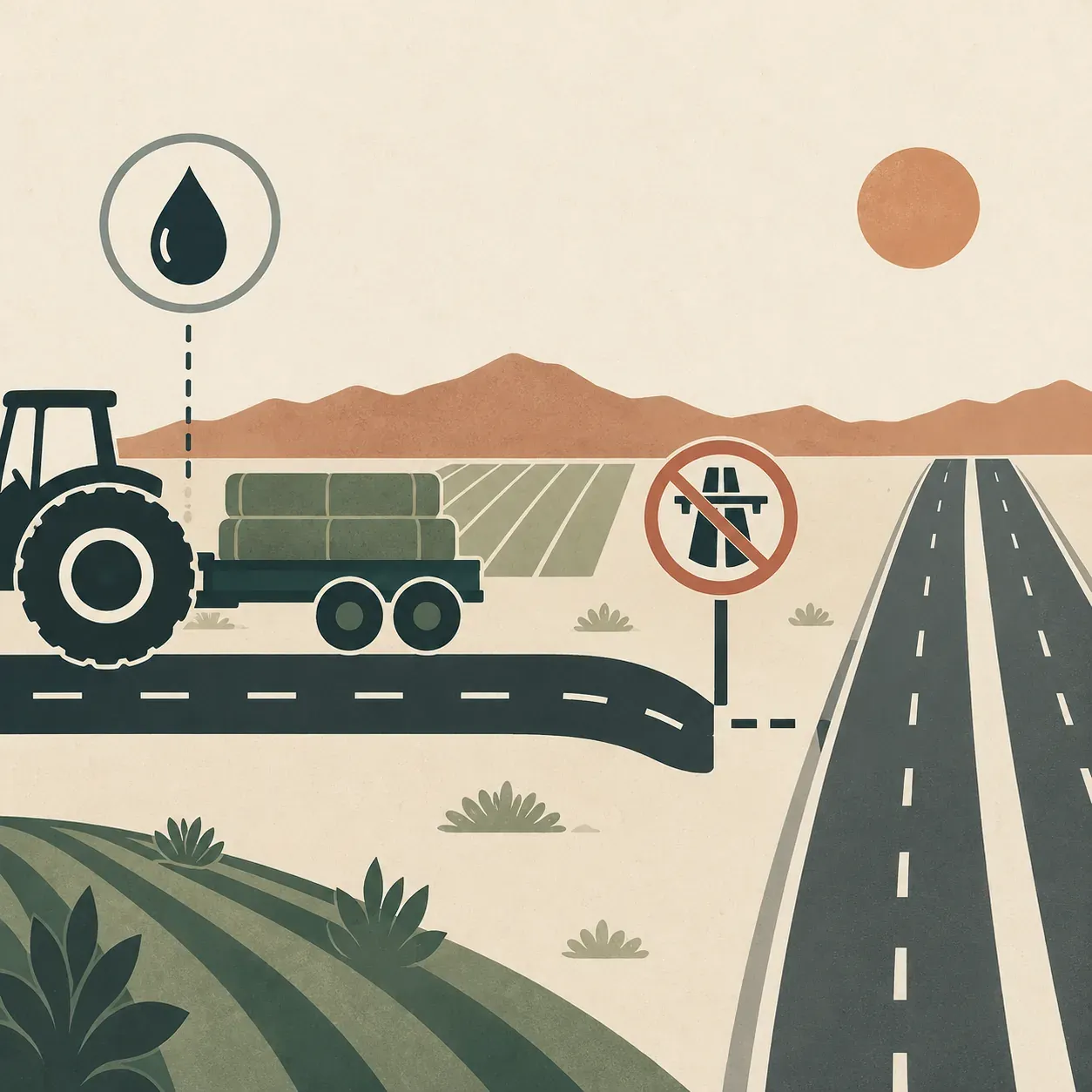
Gov. Katie Hobbs’ order takes effect Oct. 16. It directs agencies to ease certain dyed-diesel enforcement on non-interstate roads and waives state permit fees for qualifying overweight farm-related loads, but it does not authorize 90,800-pound trucks on interstate highways.
Founder & Publisher
- Published
Full article
An Arizona emergency order taking effect Oct. 16 gives some farm-related vehicles temporary relief from dyed-diesel enforcement and state permit fees. It does not repeal fuel-tax law, create a general truck-weight increase or let heavier trucks use interstate highways.
Gov. Katie Hobbs signed Executive Order 2026-03 on Oct. 13, declaring a diesel-market emergency in every Arizona county. For vehicles engaged solely in agricultural operations, moving certain farm products or hauling goods and equipment required for farm operations, state agencies must, to the extent allowed by law, deprioritize dyed-diesel enforcement on non-interstate highways through Dec. 31. Agencies must refrain from initiating inspections, citations or other enforcement actions based solely on the presence or use of dyed diesel in those qualifying vehicles during that period.
The order’s definitions are narrower than the phrase “farm-related trucking” may suggest. Agricultural operations means production of crops, livestock, poultry and related products at a facility in Arizona. Distribution of farm products refers only to moving crops from harvest to unloading, with transfer from an on-farm vehicle to another vehicle not treated as unloading, and to transporting livestock or live poultry. The order also covers transport of goods or equipment required for agricultural operations. It says agencies’ actions remain limited by existing law and expressly says it creates no legal rights or remedies.
The order also directs ADOT to treat commercial loads from 80,001 to 90,800 pounds as nonreducible for permitting on non-interstate roads when the vehicle is used solely for the specified agricultural distribution or equipment transport. The state will not charge a fee for permits issued under that direction. The order merely encourages the federal government to allow up to 90,800 pounds on interstate highways; it does not grant that authority. Operators still need the required permit and must meet other applicable requirements.
Arizona’s action follows a federal executive order addressing penalties tied to dyed diesel use on highways through Dec. 31. That federal measure concerns federal tax penalties. Arizona’s order concerns how state agencies prioritize enforcement and how ADOT handles permits. Neither should be described as making dyed fuel universally legal for all vehicles or uses.
The Governor’s office says the measures are intended to reduce costs for farmers and families. The order itself does not quantify savings for Yuma County producers or establish that grocery prices will fall. Any effect will depend on fuel availability, how many operators qualify, permit demand and business decisions that follow.
For Yuma-area operators, the practical step is to verify that a trip fits the order’s definitions, obtain an ADOT permit for any qualifying overweight load and confirm the route is not an interstate. ADOT was ordered to notify and train enforcement staff by Oct. 16. The order expires Dec. 31 unless rescinded earlier.
Sources
Why this matters to Yuma
The order applies across Arizona and may affect qualifying agricultural trips on roads used by Yuma County producers.